Quick answer: Robinhood is a strong choice in 2026 for beginners, mobile-first investors and active options traders who want $0 commissions, a very easy app, fractional shares, an IRA match (1%, or 3% with Gold) and access to crypto, futures and prediction markets. Its downsides are fewer investment types than full-service brokers (for example, limited mutual funds and bonds), support that’s mostly in-app, a transfer-out fee and a design that can encourage frequent trading. Long-term investors who want research depth and branch support may prefer a traditional broker.
This review is based on Robinhood’s official documents and public user feedback. Here’s an honest look at what it does well, where it falls short and who it suits best.
Is Robinhood worth it?
For many beginners and mobile-first investors, yes. Use this quick check, then read the details below.
| Robinhood is a good fit if… | Consider another broker if… |
|---|---|
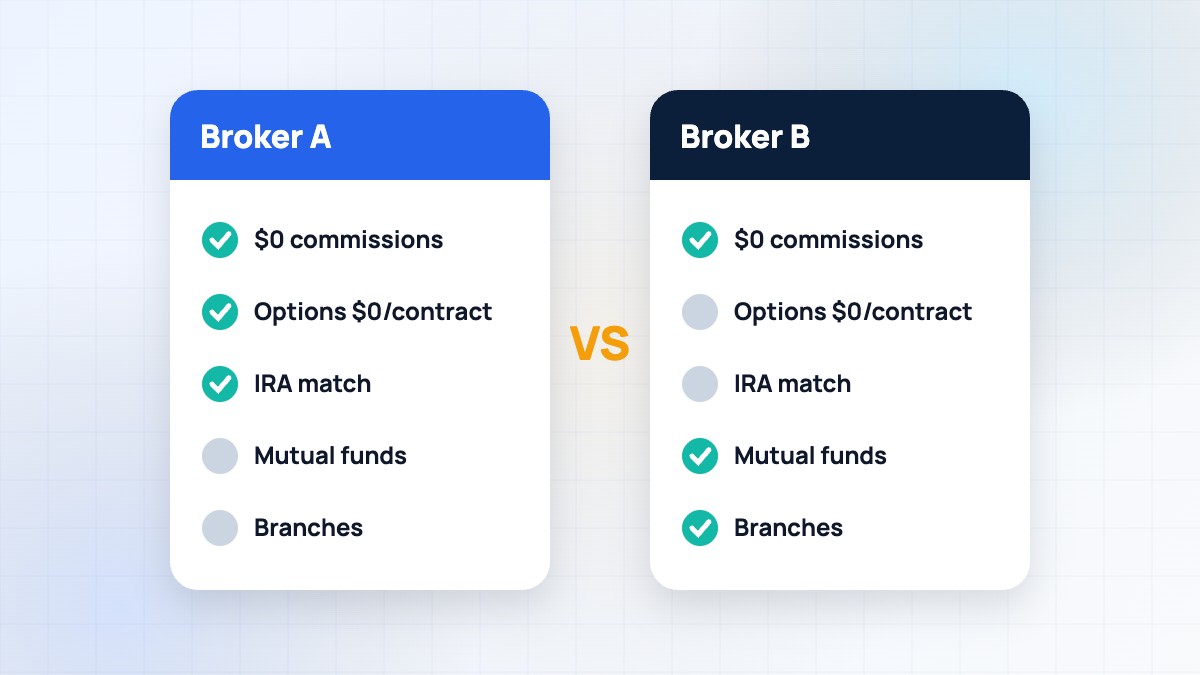
| You want $0 commissions on stocks, ETFs and options | You want lots of mutual funds and bonds |
| You like a simple phone app | You want branch or phone-first support |
| You want an IRA match on contributions | You might move your account soon, as there’s a transfer-out fee |
| You’ll invest steadily, not trade on impulse | The app might tempt you to trade too often |
See our full fee guide and is Robinhood safe? before you decide. This isn’t financial advice.
Our ratings
| Category | Score | Notes |
|---|---|---|
| Fees | 9/10 | $0 stock, ETF and standard options commissions |
| Ease of use | 9.5/10 | One of the simplest apps available |
| Investment choice | 7.5/10 | Stocks, ETFs, options, crypto, futures; few mutual funds and bonds |
| Retirement | 8.5/10 | IRA match is a standout |
| Research and tools | 7.5/10 | Good basics; deeper research with Gold and Legend |
| Support | 7/10 | In-app chat and callbacks; no walk-in branches |
| Overall | 8.5/10 | Excellent for low-cost, app-first investing |
Robinhood app reviews: what users say
| Store | Rating | Number of ratings |
|---|---|---|
| Apple App Store | 4.3 out of 5 | 4.9 million |
| Google Play | 4.8 out of 5 | 605,000 reviews |
These are the US store figures we saw on 1 November 2026, and they change often. Store ratings show how people feel about using the app. They don’t tell you whether an investment is right for you, or what support is like when something goes wrong.
What Robinhood does well
Low costs
Stock, ETF and standard options trades have no commission and there are no account minimums. Options traders especially benefit because there’s no per-contract commission on standard options. See our full Robinhood fees breakdown.
Simple, attractive app
The app makes it easy to search, buy, sell and track investments. Fractional shares let you invest by the dollar, and recurring investments automate saving.
Retirement match
Robinhood’s IRA match — 1% for everyone, 3% with Gold on eligible contributions — is rare among brokers and can add up over time.
Wide range of trading products
Beyond stocks and ETFs, Robinhood offers options, crypto, futures, prediction markets, short selling for eligible margin accounts, extended-hours trading and a 24 Hour Market for selected stocks and ETFs.
Where Robinhood falls short
- Limited traditional products: fewer mutual funds, bonds and CDs than full-service brokers.
- Support model: help is through in-app chat and callback requests, with no branches or direct-dial phone line.
- Transfer-out fee: leaving Robinhood through ACATS carries a fee.
- Gamified feel: the easy design can encourage frequent trading, which isn’t ideal for every investor.
- Past controversies: regulatory fines and the 2021 trading restrictions still affect some users’ trust.
Investments available
| Asset | Available? |
|---|---|
| US stocks and ETFs | Yes, including fractional shares |
| Options | Yes, with approval levels |
| Crypto | Yes, many popular coins |
| Futures | Yes, for eligible customers |
| Prediction markets | Yes, event contracts in many states |
| IPOs | Yes, through IPO Access |
| Mutual funds | Very limited |
| Bonds and CDs | Limited compared with traditional brokers |
| Managed portfolios | Yes, Robinhood Strategies |
Robinhood Gold
Gold ($5/month or $50/year) adds higher cash interest, a bigger IRA match, cheaper margin, research and data. It’s good value for people with meaningful cash or IRA contributions. Our Robinhood Gold guide includes simple break-even math.
Safety and regulation
Robinhood’s brokerages are SEC-registered, FINRA members and SIPC members, with coverage up to $500,000 including $250,000 for cash, plus reported excess coverage. Crypto isn’t SIPC-protected. Use two-factor authentication and watch for scams that impersonate Robinhood.
Desktop and advanced tools
Robinhood works in a web browser, and active traders can use Robinhood Legend, a free browser-based desktop platform with advanced charting, multiple layouts and many technical indicators. In 2026 Robinhood also added ways for customers to connect their own AI agents to trade in a separate account, with safety controls. These tools make Robinhood more capable for experienced traders than its simple app suggests.
Customer support
Support is available through in-app chat and phone callbacks requested in the app. There’s no public number to dial, which protects against impersonation but frustrates some users. Response times vary. Official help articles at the help centre answer many questions.
How Robinhood makes money
Robinhood charges no commission on most stock, ETF and options trades, so its income comes from elsewhere. Knowing where helps you judge the “free” label.
- Payment for order flow: trading firms pay to handle customer orders. Robinhood’s disclosures name this as a source of revenue tied to customer trading, so the company earns more when customers trade more.
- Interest: Robinhood earns interest on margin loans and on uninvested customer cash.
- Securities lending: it can earn revenue by lending eligible shares.
- Subscriptions: Robinhood Gold costs $5 a month or $50 a year.
None of this means your trades are unsafe, but it does explain why the app encourages activity. In practice, the question to ask is whether a trade makes sense for you, not whether it is free.
Sources: Robinhood’s Regulation Best Interest disclosure, its payment for order flow explainer and the SEC’s 2020 order.
Who Robinhood is best for
- Beginners who want a simple app and small starting amounts.
- Options traders who want no per-contract commissions on standard options.
- IRA savers who value the match.
- Mobile-first investors who rarely need phone or branch support.
- Crypto users who want stocks and crypto in one app.
Who might prefer another broker
- Investors who want lots of mutual funds or bonds.
- People who value in-person or easy phone support.
- Those who want deep research included free.
- Investors who find a trading-focused app tempts them to over-trade.
A real-world example
After testing for a year, a couple in their thirties used Robinhood for Roth IRAs (for the 3% Gold match) and a taxable account with recurring ETF investments, while keeping their 401(k) at work and bonds at another broker. They valued Robinhood’s low costs and simplicity, but used another broker for products Robinhood doesn’t offer. Many investors find a mix like this works well.
How we reviewed Robinhood
This review is based on Robinhood’s official fee schedules, disclosures, support articles and product pages as of October 2026, plus public records from the SEC and FINRA. The scores above are our editorial judgement from those sources, not lab measurements.
Robinhood’s 2026 updates
Robinhood kept expanding in 2026. It launched the invite-only Robinhood Platinum Card in March, let customers connect AI agents to trade in a separate account in May, and switched on Robinhood Chain in July for stock tokens offered outside the US. It also adjusted day-trading rules after FINRA removed the old pattern day trader requirement in June. These changes show Robinhood moving from a simple trading app toward a broader financial platform. For everyday investors, the core experience — easy trading, low costs and the IRA match — is still the main reason to choose it.
Opening an account
Opening an account takes minutes: download the official app or visit robinhood.com, enter your details and Social Security number, link a bank and deposit. There’s no minimum. Turn on two-factor authentication straight away. Our beginner’s guide walks through each step with screenshots-style explanations.
Tips if you choose Robinhood
Turn on two-factor authentication, use limit orders, set up recurring investments, learn the IRA match conditions and avoid margin and options until you understand them. Review your monthly statements and tax documents so nothing surprises you.
FAQ
Is Robinhood good for beginners?
Yes for ease of use and low costs, as long as beginners avoid complex products until they understand them.
Is Robinhood good for long-term investing?
It can be, especially with IRAs and recurring investments, but it offers fewer fund types than some brokers.
Is Robinhood trustworthy?
It’s regulated and SIPC-protected. See our Robinhood safety guide.
What’s the biggest downside?
Limited product range for traditional investors and mainly in-app support.
Our verdict
Robinhood is one of the best low-cost, easy-to-use brokers in 2026, with standout perks like the IRA match and no-commission options. It’s less suited to investors who need a full menu of funds and bonds or traditional support. If it fits your needs, start with our step-by-step guide. This review is educational and not financial advice.
RobinhoodTradeApp Guide is an independent website and is not affiliated with, endorsed by or sponsored by Robinhood Markets, Inc. This article is for educational purposes only and is not financial, investment or tax advice. Fees, rates and features change often, so always confirm details on Robinhood’s official website. Investing involves risk, including the possible loss of principal.

Leave a Reply