
Quick answer: Robinhood lets eligible customers trade stock, ETF and index options with $0 commission on standard options (small regulatory fees apply, and index options carry a per-contract fee). To start, you apply for options trading in the app, and Robinhood assigns an options level based on your experience, finances and goals — lower levels allow buying calls and puts and covered strategies, higher levels allow spreads. Options can expire worthless, so you can lose your entire investment quickly. Learn the basics before trading.
Options are one of Robinhood’s most popular features. This guide explains how they work on Robinhood, how to get approved, what they cost and the risks.
Robinhood options at a glance
| Item | Details |
|---|---|
| Commission | $0 on standard stock and ETF options |
| Regulatory fees | Small per-contract fees on trades |
| Index options | Per-contract fee (lower with Gold) |
| Approval | Required; levels determine allowed strategies |
| Hours | Mainly regular market hours; some products have extended sessions |
| Platforms | Mobile app, web and Robinhood Legend |
What is an option? (simple explanation)
An option is a contract that gives you the right, but not the obligation, to buy or sell 100 shares of a stock at a set price (the strike price) before a set date (the expiration).
- A call gains value when the stock rises above the strike.
- A put gains value when the stock falls below the strike.
- The price you pay is the premium, quoted per share (multiply by 100 for one contract).
Options lose value over time as expiration approaches, especially in the final weeks. The SEC’s Investor.gov options guide explains the basics clearly.
How to get approved
- Go to Account → Settings → Investing (or the options section) and choose to enable options.
- Answer questions about your experience, income, net worth and goals.
- Read and accept the options agreement and risk disclosure (“Characteristics and Risks of Standardized Options”).
- Robinhood reviews your application and assigns a level.
Be honest. Levels exist to protect you from strategies with risks you may not be ready for.
Options levels explained
| Level | Typical strategies |
|---|---|
| Basic level | Buy calls and puts; covered calls; cash-secured puts |
| Advanced level | Spreads such as verticals, iron condors, calendars and straddles |
Exact level names and permissions can change; the app shows what your account can do.
Options fees in detail
Robinhood doesn’t charge a commission on standard equity and ETF options. You’ll still see small regulatory pass-through fees per contract. Index options (such as those on major indexes) carry a per-contract fee that is lower with Robinhood Gold. Exercise and assignment are generally free, but confirm in the official fee schedule. Compared with brokers charging around $0.50–$0.65 per contract, Robinhood is very cheap for options. See all costs in our Robinhood fees guide.
How to place an options trade
- Search for the stock or ETF and tap Trade → Trade Options.
- Choose Buy or Sell, and Call or Put.
- Pick an expiration date and strike price from the options chain.
- Check the break-even price, premium and probability details shown.
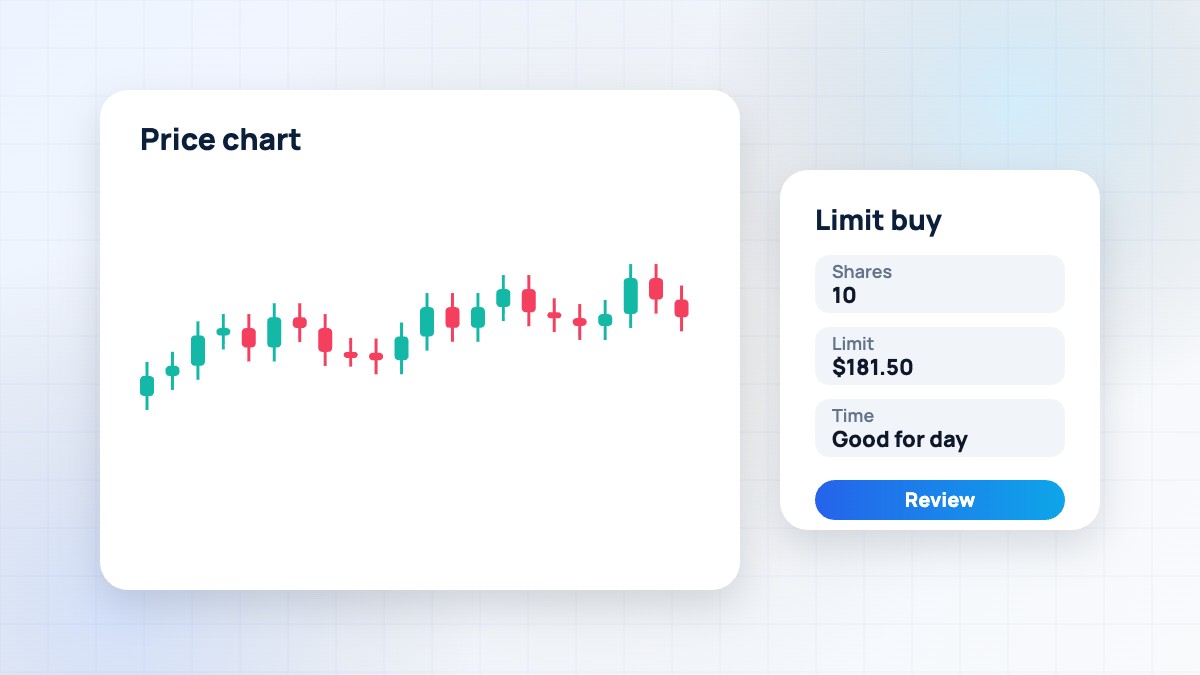
- Choose a limit order (recommended — option spreads can be wide).
- Enter quantity and review. Confirm to submit.
To close a position, open it in your portfolio and tap Trade → Sell (or Buy to close for short options) before expiration.
Trading hours
Most stock and ETF options trade during regular market hours, 9:30 a.m. to 4:00 p.m. Eastern Time. Some index and ETF options trade until 4:15 p.m., and Robinhood has expanded hours for certain products. Options generally don’t trade in the overnight 24 Hour Market. Check each contract’s hours in the app.
Expiration and exercise
- Robinhood may automatically close or exercise positions near expiration based on its policies and your buying power.
- If you don’t have enough buying power to exercise, Robinhood may sell the option for you.
- Short options can be assigned at any time, which means you must buy or sell the shares.
- Out-of-the-money options typically expire worthless.
Key risks
- Total loss: bought options can expire worthless.
- Time decay: options lose value as expiration nears.
- Volatility: changes in expected volatility affect prices.
- Leverage: small stock moves can mean big percentage swings.
- Wide spreads: illiquid options can cost more to trade.
- Assignment risk for sellers.
Many new options traders lose money. Start with small amounts and simple strategies, or practise by watching positions before trading.
Options in IRAs
Retirement accounts can allow limited options strategies, such as covered calls or cash-secured puts, depending on eligibility. Margin-based strategies aren’t allowed in IRAs. Check the app for what your IRA can trade. Our IRA match guide covers the retirement basics.
Tools for options traders
Robinhood shows break-even prices, profit and loss charts, the Greeks (delta, gamma, theta, vega) and implied volatility. Robinhood Legend adds advanced charting and layouts for active traders. Gold members get Level II stock data and research.
A real-world example
Chris believed a large company would report strong earnings. Instead of buying 100 shares for about $15,000, he bought one call option for $300. The stock rose, but less than expected, and implied volatility dropped after earnings — his option lost value and he sold it for $180. He learned that options depend on timing, size of the move and volatility, not just direction. Starting small kept the lesson affordable.
Options glossary
- Strike price: the price at which the option can be exercised.
- Premium: the price of the option.
- In the money: a call with the stock above the strike, or a put with the stock below it.
- Implied volatility: the market’s expected movement, which affects premiums.
- Theta: how much value an option loses each day from time decay.
- Spread: a strategy combining two or more options.
Simple strategies beginners learn first
Many new options traders start with covered calls (selling calls on shares they already own to earn income) or cash-secured puts (selling puts with enough cash set aside to buy the shares). These have defined risks compared with naked selling. Others buy calls or puts with small amounts to learn how prices move. Whatever you choose, understand the maximum loss before you trade.
Related guides
- Robinhood Gold: Cost, Benefits and Is It Worth It in 2026?
- How to Buy Stock on Robinhood (Step by Step)
FAQ
Does Robinhood charge fees for options?
No commission on standard options, but regulatory fees apply and index options have a per-contract fee.
How do I get approved for options on Robinhood?
Apply in the app under investing settings; approval depends on your profile and experience.
Can I lose more than I invest with options?
When buying options, your maximum loss is what you paid. Some selling strategies can lose much more.
What happens at expiration?
In-the-money options may be exercised or closed automatically; out-of-the-money options expire worthless.
Can I trade options in an IRA?
Some limited options strategies may be allowed in IRAs; check eligibility in the app.
Our take
Robinhood is one of the cheapest and simplest places to trade options. That ease is also a risk: options are complex and can lose value fast. Learn first, use limit orders and keep position sizes small. This article is educational and not financial advice.
RobinhoodTradeApp Guide is an independent website and is not affiliated with, endorsed by or sponsored by Robinhood Markets, Inc. This article is for educational purposes only and is not financial, investment or tax advice. Fees, rates and features change often, so always confirm details on Robinhood’s official website. Investing involves risk, including the possible loss of principal.

Leave a Reply